 Tulum Cenotes
Gran Cenote Tulum: Price, Hours and What to Expect
Gran Cenote Tulum is the closest of the famous cenotes to town, four to five kilometres out on the Coba road: a C-shaped sinkhole about 150 metres long with two open pools, a stalactite cavern between them and freshwater turtles in both. It publishes no price and takes cash, which is why the figures you read vary by hundreds of pesos. Here is what visitors actually paid in 2026, when to arrive, and which Tulum cenotes tour is built around its opening hour.
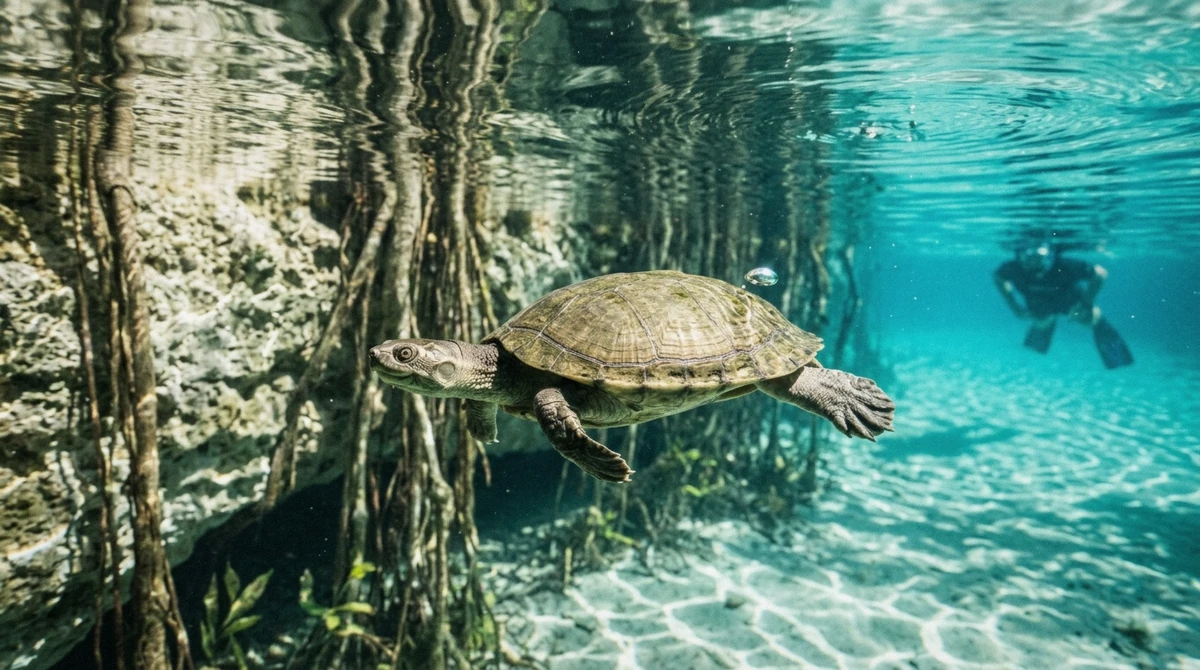
Quick answer What Gran Cenote charges, when it is quiet, and why nobody can quote a firm price
Gran Cenote sits four to five kilometres out of Tulum town on the Coba road and is the cenote most people mean when they say they want to see one. It is a C-shaped sinkhole about 150 metres long, part of the Sac Actun system, with two open pools joined by a cavern hung with stalactites and busy with freshwater turtles. It publishes no price and takes cash: reports through 2026 range from MX$200 to MX$500, which tells you how much weight to give any single figure. It opens at 08:00, stops admitting at about 16:15, and enforces a rinse shower at the entrance.
Key takeaways
- No published tariff - reports run MX$200 to MX$500, cash, and there is no cash machine at the gate
- Water is 3 to 4 metres deep across most of it, about 10 metres at the deepest point
- Turtles are the reliable sighting; the cavern has stalactites and bats overhead
- It fills by mid-morning - the private three-cenote morning is built around arriving at opening
- A colectivo from town on the Coba road is MX$30 to MX$50; by bike it is 20 to 35 minutes
What Gran Cenote Is Like
Two open pools and the cave between them, reached by wooden stairs and platforms. It is the easiest famous cenote to get to from Tulum, and that is both its appeal and its problem.
The shape of it
A C-shaped sinkhole roughly 150 metres long, jungle on one side and limestone cliff and cave mouths on the other. The two open sections connect through a flooded passage you can snorkel, with columns and stalactites in the roof and bats living in the dark section.
Depth is modest: three to four metres across most of the swimming area, reaching about ten in places. That makes it a snorkelling cenote first, a cavern-dive site second, and never a jumping cenote - the platforms people jump from are elsewhere, at Cenote Jaguar and Zemway.
Turtles, and what else lives there
Freshwater turtles are easy to see, often several in a single swim, and there is a roped section closed off to protect them. Fish are scarce, which surprises people who expect a cenote to look like an aquarium: the water is clear precisely because there is very little in it.
The bats are in the cavern roof and stay there. Nothing in this cenote is dangerous.
Part of something much bigger
Gran Cenote is one entrance to the Sac Actun system, the surveyed cave network that runs for hundreds of kilometres under the jungle and connected to the Dos Ojos system in January 2018 to become the longest known underwater cave system on earth.
What you swim is a lit fragment of it. The rest is a cave-diving environment; the guided sections open to visitors are sold on the private Sac Actun day, not here.
When it is worth it and when it is not
Early, it is the best-value cenote near Tulum: clear water, turtles, a cavern to swim through, twenty minutes from town. By eleven it is a queue on the stairs and a crowded pool, and the same money buys a quieter cenote further out.
Reviewers who come away unimpressed almost always arrived at midday. That is the whole review, condensed.
What the name means, and the history under it
Gran Cenote is a modern tourist name for one entrance among hundreds into the Sac Actun system, which the Maya knew as the only fresh water on a peninsula with no surface rivers. Cenote itself is a Spanish rendering of the Yucatec Maya word tz'onot, meaning a well or a sinkhole reaching water.
That is the reason the rules here are strict rather than fussy. What swims in the cenote drains into the aquifer that supplies the towns along this coast, so the shower before entry and the ban on sunscreen are protecting drinking water as much as the visibility you came for.
Gran Cenote Prices, Hours and the Shower Rule
This cenote has no website and no online tariff, so every number below is what visitors and guides reported through 2026 rather than a published figure. The spread is the story. Admission, hours and the shower rule are published on Gran Cenote's own site.
What people actually paid
The 2026 reports cluster at MX$500 for adult entry, with older sources still circulating MX$150 to MX$200, and life jackets and snorkel sets now rented separately at the gear hut rather than included. Take cash in pesos: cards are accepted at some gates with a foreign-card surcharge, and there is no cash point on site.
Set against the parks that do publish - Dos Ojos at MX$400, Casa Tortuga from MX$650 at the window - a MX$500 gate is at the top of the local range for a single cenote.
| What | Reported figure | How firm it is |
|---|---|---|
| Adult entry | MX$500 in 2026 reports; MX$150 to MX$200 in older ones | No published tariff - treat as a range and bring extra |
| Life jacket / snorkel set | Rented separately at the hut | Reported as included in older guides; no longer |
| Opening hours | 08:00 to about 16:45 | Consistent across recent reports |
| Last entry | Around 16:15 | Enforced; arriving later is the common wasted trip |
| Payment | Cash in pesos; cards sometimes, with a surcharge | No cash machine at the gate |
The rinse shower is not optional
You wash before you get in, and staff enforce it. Sunscreen, repellent and hair product all come off first - the water here feeds the aquifer the peninsula drinks from, and the same rule applies at Dos Ojos, Casa Tortuga and Yax Muul.
The practical answer is a rash guard instead of lotion. Apply nothing before you arrive and you will not be sent back to the showers a second time.
Getting there from Tulum
Four to five kilometres out of town on the road to Coba. A colectivo along that road costs MX$30 to MX$50 and will drop you at the entrance; a rented bike costs MX$150 to MX$250 a day and takes 20 to 35 minutes, on a road with far less traffic than Highway 307.
The first hour after opening is the reason to sort transport the night before. The private three-cenote morning exists precisely to be at this gate when it opens, and it continues to Cenote Zemway and Casa Cenote afterwards.
Gran Cenote or the other three on this road
Three more cenotes sit on the same Coba road within a few kilometres, and on a day when Gran Cenote is full they are the reason not to give up and go back to town. None of them publishes a tariff either; the figures are what visitors reported through 2026.
| Cenote | What it is | Reported price | Why you would go instead |
|---|---|---|---|
| Gran Cenote | Cavern plus two open pools, turtles | MX$500 in 2026 reports | The stalactite swim and the turtles, if you arrive early |
| Cenote Calavera | Three holes in the rock with a ladder and jumps | MX$250 plus MX$50 life vest | Jumping, and it is closer to town |
| Cenote Zacil-Ha | Small pool-like cenote with a zip line | MX$300 | Quieter, shallow, easy with children |
| Cenote Cristalino and Escondido | Two open cenotes on one ticket | MX$200 for both | Cheapest swim per cenote on this side of Tulum |
Tours That Include Gran Cenote
One listing on this site reaches Gran Cenote, and it arrives in the morning before the coaches. Price, rating and review count were read from the listing in September 2026; entrance fees are not itemised by that operator, so carry pesos.
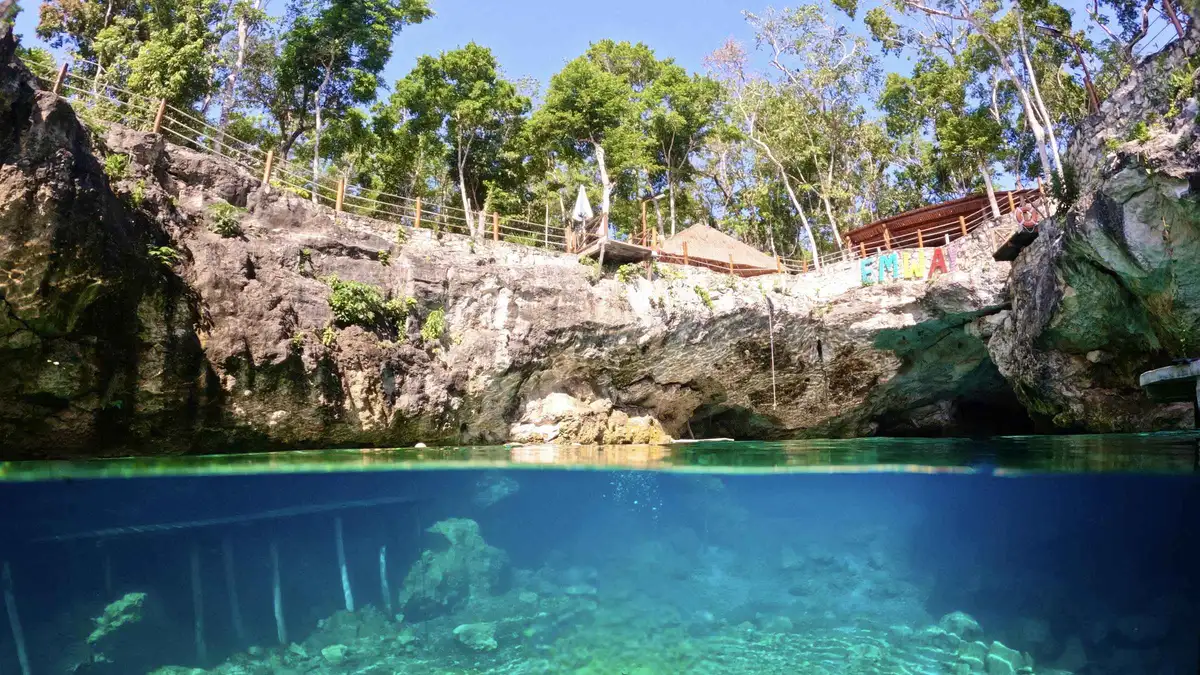
Cenote Triple Adventure: Gran Cenote, Zemway and Casa Cenote
The three cenotes everyone comes for - the caverns of Gran Cenote, the jump platforms at Zemway and the mangrove channel of Casa Cenote - with 45 minutes at each and a private guide. It leaves in the morning, before the coaches.
- Cancellation
- Free cancellation 24h
- Operator
- Adventure Tour Center
Gran Cenote on Video
Gran Cenote alongside three others, which is the fastest way to see whether the cavern or the open pools are what you are after.
Where Gran Cenote Is
On the Coba road, four to five kilometres northwest of Tulum town - the closest of the famous cenotes to the centre.
Cenote Zacil-Ha and Cenote Calavera sit on the same road within a few kilometres.
Gran Cenote: Questions Before You Go
How much does it cost to go to Gran Cenote?
There is no published tariff. Reports through 2026 put adult entry at MX$500, while older guides still quote MX$150 to MX$200, and life jackets and snorkel sets are rented separately. Bring cash in pesos and treat any single figure you read, including this one, as a range.
How deep is Gran Cenote?
Three to four metres across most of the swimming area, reaching around ten metres at the deepest point. It is a snorkelling cenote rather than a deep one; the cave passages beyond the daylight zone are part of the Sac Actun system and are cave-diving territory.
Is Gran Cenote worth visiting?
Early in the day, yes - clear water, freshwater turtles, a stalactite cavern to swim through and only twenty minutes from Tulum town. After about eleven in the morning the same money buys a quieter cenote further out. Nearly every disappointed review describes a midday visit.
What time does Gran Cenote open?
From 08:00, with last entry reported at around 16:15 and closing at about 16:45. The first hour is the quiet one and the reason the guided morning tours build their route around it.
Are there turtles at Gran Cenote?
Yes, freshwater turtles are the reliable sighting and there is a roped-off section that protects them. Fish are scarce here, which is part of why the water looks as clear as it does.
Do you have to shower before entering Gran Cenote?
Yes, and it is enforced at the entrance. Sunscreen, insect repellent and hair products all have to come off first because the water feeds the peninsula's aquifer. Wear a rash guard rather than lotion and the rule costs you nothing.