 Tulum Cenotes
Casa Cenote Tulum: Prices, the Halocline and Panchito
Casa Cenote Tulum is the odd one out among the famous cenotes: not a shaft in the limestone but a brackish channel winding through mangrove near Tankah Tres, open to the sky, shallow, and shimmering where fresh water meets the sea. It is also the one with a resident crocodile, and after an incident on 12 May 2026 the municipality began drafting rules for cenotes where crocodiles live. Here is what it costs, how to swim it, and which Tulum cenotes tour arrives before the crowds.
Quick answer What Casa Cenote costs, what makes it different, and the crocodile question
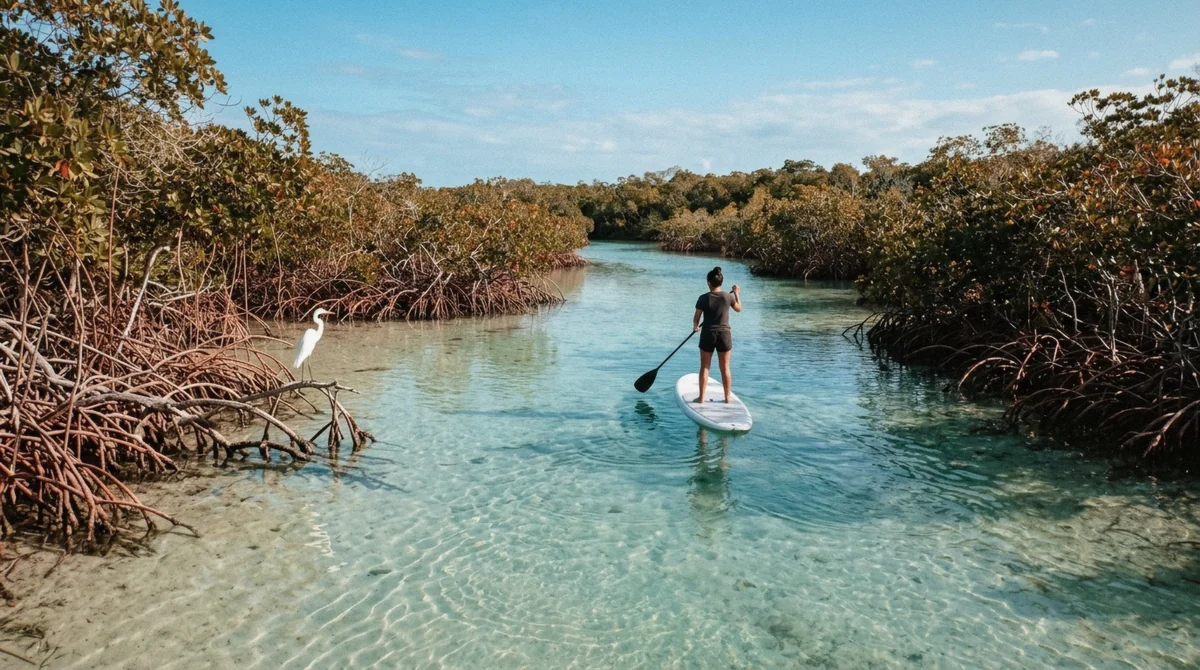
Casa Cenote, also called Cenote Manati, is a brackish channel winding through mangrove near Tankah Tres, about fifteen minutes north of Tulum on the coast road. Fresh water from the cave system meets salt water pushing in from the sea, which produces the shimmering halocline that makes photographs here look out of focus when they are not. It is open to the sky end to end, shallow, and easy for weak swimmers. It is also home to a resident Morelet's crocodile, Panchito, who bit an elderly visitor on 12 May 2026 after people threw stones at him - and that incident is now driving new municipal rules on what visitors may do in cenotes where crocodiles live.
Key takeaways
- The cenote's own site lists MX$150 to swim in the front of the lagoon; other 2026 reports quote about MX$500 at the gate
- A guided snorkel through the channel is listed at MX$500 per person
- Open water, no cave and no stairs into a shaft - the easiest of the famous cenotes for nervous swimmers
- The crocodile is real and resident; the 2026 incident followed visitors provoking him
- Two listings here stop at Casa Cenote: the private morning and the small-group day
What Casa Cenote Is
Nothing about it matches the postcard idea of a cenote, which is exactly why people who have already swum in two or three come here for the third.
A channel, not a sinkhole
Casa Cenote is the visible end of an underground river reaching the coast: a winding, mangrove-lined channel a few hundred metres long, open to the sky, shallow enough to stand in at the edges and rarely more than a few metres deep in the middle.
There is no shaft, no ladder into a dark chamber and no roof overhead. You get in from a bank or a small dock and swim or float with the current, which moves slowly toward the sea.
The halocline, and why photos look blurry
Fresh water from the cave system sits on top of denser salt water pushing in from the Caribbean a couple of hundred metres away. Where they meet, the light refracts and the water shimmers as if the lens has smeared - divers see it as a visible layer, snorkellers as a wobble in the middle of the channel.
That mix is also why the fish life is unusual for a cenote: brackish species, small tarpon, the occasional barracuda near the sea end, and mangrove roots full of juveniles. Gran Cenote has turtles and clear water; this one has a working ecosystem.
Who it suits
Anyone uneasy about enclosed water. Families with children who want to paddle rather than climb into a cavern. Snorkellers who prefer looking at life rather than rock. Photographers, for the halocline.
It suits cave enthusiasts least. If the stalactite chambers are what you came to Mexico for, Taak Bi Ha on the small-group day or the Sac Actun cave sections are the ones to book.
Panchito, the Resident Crocodile
Casa Cenote's crocodile is not a rumour, a one-off sighting or a marketing line. He has lived in this channel for years, dive operators name him in their briefings, and video of him swimming past snorkellers has circulated for a decade.
What he is
Panchito is a Morelet's crocodile, Crocodylus moreletii, a freshwater species native to the peninsula, and small to medium as crocodiles go. He has been in this cenote since he was young and is habituated to people to a degree that visiting guides describe as docile.
Habituated is not the same as tame. That distinction is the whole of what follows.
The May 2026 incident
On 12 May 2026 Panchito bit an elderly visitor. Witness accounts reported by local outlets say several people had been throwing stones at him as he swam near the bank, apparently trying to provoke a reaction on camera. Reporting at the time noted the visitor was hospitalised and that no municipal or environmental statement had been issued in the first days after.
Until then there had been no reported attack by this animal in years of daily contact with swimmers.
What is changing as a result
Tulum's Directorate of Environmental Sustainability, working with Civil Protection, said it was drawing up rules defining what is permitted in cenotes and mangrove areas where crocodiles are present. Reported intentions include a strict ban on activities that disturb the animals - swimming or diving right alongside them - and clear signage at the water about what is and is not allowed.
So the sensible expectation for a 2026 or 2027 visit is that swimming here continues, with distance rules and signs, and that the guided-snorkel option becomes the norm rather than a nicety.
How to behave in the water
Keep distance and do not follow him for a photograph. Do not feed anything. Do not throw anything. Get out if he moves toward the section you are in and let him pass - guides here have done this routinely for years.
If that sounds like more than you signed up for, the cenotes with no crocodile are the enclosed ones: Dos Ojos, Taak Bi Ha, the Casa Tortuga park.
Prices, Hours and Getting There
Casa Cenote sits on private land beside a small hotel and restaurant of the same name, and what you pay depends on which gate you arrive at and what you want to do. Entry and opening hours are published by Casa Cenote.
What the numbers are
The property's own site lists MX$150 to swim in the front of the lagoon and MX$500 per person for a guided snorkel through the channel, with gear rental, introductory dive classes, paddleboards and kayaks on site. Independent 2026 reports put general entry closer to MX$500 with an extra charge of about MX$100 to bring an action camera, which suggests the access point and the season both matter.
As everywhere in this area with no published tariff, take pesos in cash and treat any figure as a range.
| What | Figure | Source |
|---|---|---|
| Swim, front of the lagoon | MX$150 | The property's own website, September 2026 |
| Guided snorkel through the channel | MX$500 per person | The property's own website |
| General entry reported by visitors | About MX$500 | Independent 2026 travel reports |
| Action camera | About MX$100 extra | Independent 2026 travel reports |
| Gear | Snorkel rental, paddleboard, kayak on site | The property's own website |
Hours and how to arrive
There is no published opening schedule; the restaurant closes before seven in the evening and the water is a daytime proposition. Practically, the same rhythm applies as everywhere near Tulum - the channel is quiet early and busy from late morning.
It is about fifteen minutes north of Tulum town on the coast road toward Cancun, in the Tankah Tres area. Colectivos on Highway 307 pass the turn-off; a taxi from town is the simple option. The two guided days that stop here handle the transport themselves.
Snorkel, dive or paddle
Snorkelling is the default and needs nothing but a mask. Diving is what the channel is quietly famous for - shallow, bright, and the best place in the area to see a halocline without entering a cave, which is why dive shops in Tulum use it for training and photography. Paddleboards and kayaks are rented at the property for anyone who would rather look down through the surface than swim.
The small-group day with lunch snorkels here first thing in the morning, before the vans arrive, and every entrance fee on that trip is prepaid.
Snorkel, dive or paddle, priced
Three ways to spend time in the channel, with what each one needs and where it is booked. Prices come from the property's own site and, where marked, from independent 2026 reports.
| What you do | What it needs | Where it is booked |
|---|---|---|
| Swim in the front lagoon | Nothing; life jackets available | At the gate, MX$150 on the property's site |
| Guided snorkel through the channel | A guide, listed at MX$500 per person | At the property, or included on the small-group day |
| Cavern-free scuba dive | Open-water certification | Tulum dive shops; the property also runs introductory classes |
| First dive with no certificate | A 30-minute lesson and an instructor | The discover-scuba listing, instructor to four divers |
| Paddleboard or kayak | Nothing | Rented at the property |
Tours That Stop at Casa Cenote
Two listings on this site include Casa Cenote, and they treat it differently: one gives it 45 minutes inside a three-cenote round, the other opens the day here before anyone else arrives. Prices and ratings were read from the listings in September 2026.
Cenote Triple Adventure: Gran Cenote, Zemway and Casa Cenote
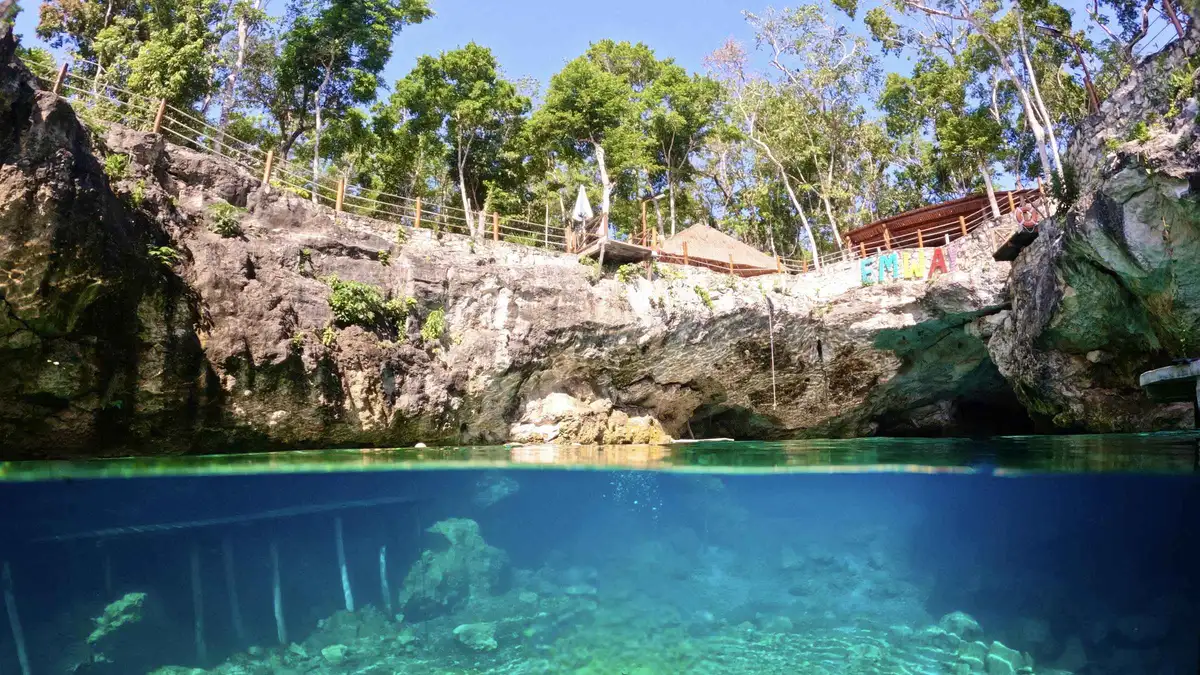
The three cenotes everyone comes for - the caverns of Gran Cenote, the jump platforms at Zemway and the mangrove channel of Casa Cenote - with 45 minutes at each and a private guide. It leaves in the morning, before the coaches.
- Cancellation
- Free cancellation 24h
- Operator
- Adventure Tour Center
Three Cenotes Adventure Tour with Lunch
The only listing here that states every cenote entrance fee is included - nothing is collected at any gate
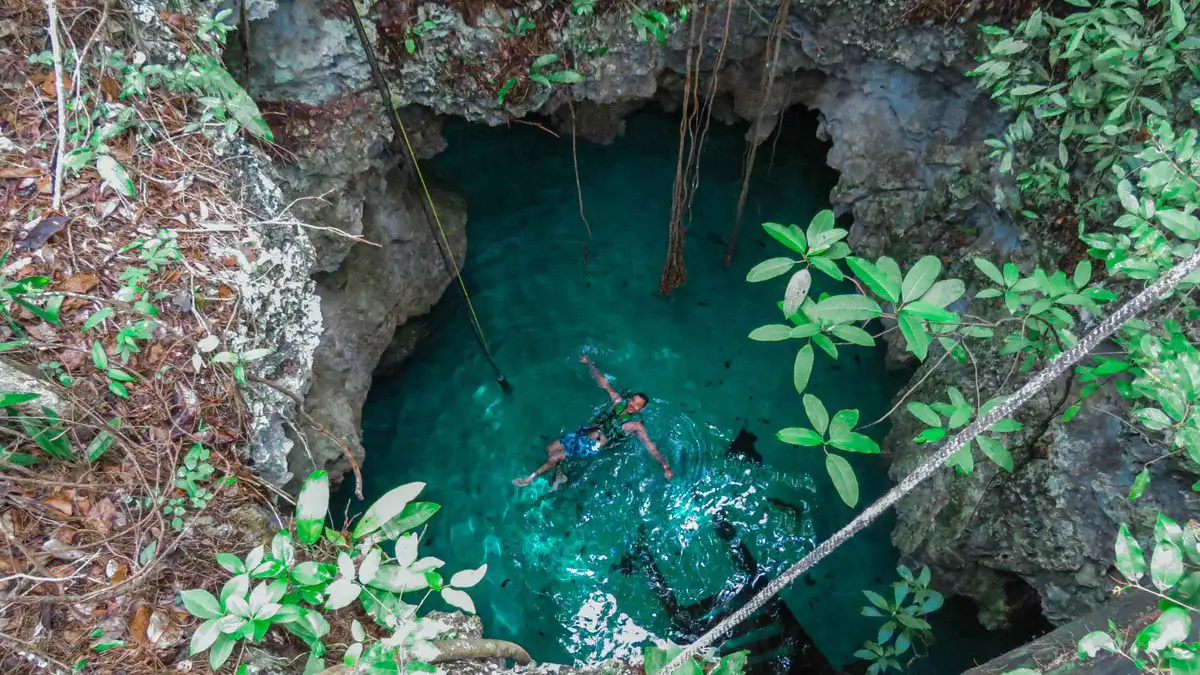
Six hours, ten people maximum, and every gate fee already paid: an early snorkel at Casa Cenote before the crowds, the Taak Bi Ha cave by lamplight, a private underground cenote and a vegetarian lunch cooked by a Maya family.
- Cancellation
- Free cancellation 24h
- Operator
- Mexico Kan Tours
Casa Cenote and the Alternatives on Video
Casa Cenote among the region's better-known ones, useful for seeing how different an open mangrove channel looks next to a cavern.
Where Casa Cenote Is
Tankah Tres, about fifteen minutes north of Tulum town on the coast road, a couple of hundred metres inland from the Caribbean.
The channel drains toward the sea, which is what produces the halocline in the middle of it.
Casa Cenote: Questions Before You Go
Is there really a crocodile in Casa Cenote?
Yes. Panchito is a Morelet's crocodile who has lived in the channel for years and is well known to local dive operators. On 12 May 2026 he bit an elderly visitor after people reportedly threw stones at him; it was the first reported attack in years of daily contact with swimmers, and it prompted the municipality to begin drafting rules for cenotes where crocodiles are present.
Is it safe to swim at Casa Cenote?
People swim here daily and have done for years. The rules that matter are keeping distance from the crocodile, never feeding or provoking wildlife, and getting out of a section he swims into. Guided snorkels exist for exactly this reason, and new municipal signage and distance rules were being prepared through 2026.
How much does Casa Cenote cost?
The property's own site lists MX$150 to swim in the front of the lagoon and MX$500 per person for a guided snorkel. Independent 2026 reports put general entry closer to MX$500, plus about MX$100 to bring an action camera. There is no published single tariff, so carry pesos and expect a range.
What is the halocline at Casa Cenote?
The visible boundary where fresh water from the cave system sits above denser salt water pushing in from the sea. Light bends as it crosses that layer, so the water looks smeared or wobbly. It is the reason divers and photographers rate this cenote so highly.
Can you dive at Casa Cenote?
Yes, and it is a favourite training and photography site: shallow, bright and open to the sky, with the halocline to swim through and no overhead environment. The property offers introductory classes, and Tulum dive shops run guided dives here.
Is Casa Cenote good for children or weak swimmers?
It is the least intimidating of the famous cenotes near Tulum - open sky, shallow edges, no shaft or ladder into a dark chamber, and life jackets available. The crocodile rules apply to everyone, so children should be within arm's reach and nobody should follow him for photographs.